Yuge Yugeen Bharat Museum: Inside the World's Largest Museum Rising on Raisina Hill
How India's North and South Blocks are being transformed into a 1.55-lakh-square-metre monument to 5,000 years of civilisation
For more than a century, the sandstone facades of New Delhi's North and South Blocks have stood as the administrative heart of India, first under colonial rule and later as the seat of independent India's government. Ministries have moved in and out of these grand Edwardian-Baroque buildings on Raisina Hill, and countless policy decisions have been signed within their long, echoing corridors.
Now, in one of the most ambitious cultural undertakings India has ever attempted, these very buildings are being reborn as the Yuge Yugeen Bharat Museum — a museum whose name translates roughly to "Timeless India" or "India Across the Ages." When complete, it is expected to be the largest museum in the world, surpassing even the Louvre in Paris in terms of sheer physical scale.
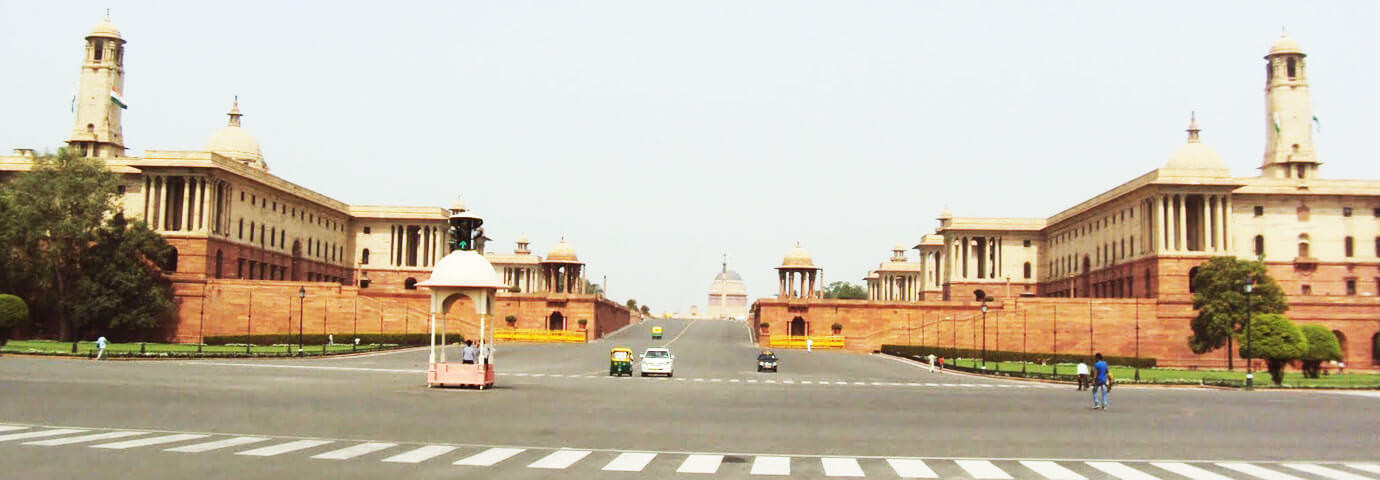
Yuge Yugeen Bharat Museum
This is not a small renovation project or a modest addition to India's museum landscape. It is a full reimagining of what a national museum can be: a sprawling, multi-building cultural campus designed to hold the entire arc of Indian history, from prehistoric artefacts to the aspirations of a 21st-century nation, under one roof — or rather, under many roofs joined together across two historic government complexes.
A Museum Born From an Idea in 2023
The concept of turning the Central Secretariat into a museum was first floated by Prime Minister Narendra Modi in May 2023, during discussions around the broader Central Vista Redevelopment Project. The Central Vista plan already included a new Parliament building and a redesigned ceremonial boulevard, but the idea of repurposing North and South Block — rather than demolishing or simply retrofitting them for other government use — added an entirely new cultural dimension to the redevelopment.
By December 2023, the idea had moved from a proposal to a formal agreement. India's Ministry of Culture signed a partnership with the French government and France Muséums Développement, the organisation behind some of France's most celebrated cultural exports, including its advisory role in the creation of the Louvre Abu Dhabi. This Indo-French collaboration meant the new museum would benefit from decades of French expertise in exhibition design, visitor flow, conservation science, and large-scale museum planning, while remaining unmistakably Indian in its content and spirit.
From Idea to Institution: The Formal Signing
The partnership was formalised further in December 2024, when officials from the National Museum and France Muséums Développement signed a detailed cooperation agreement in New Delhi. External Affairs Minister Dr S. Jaishankar and Culture Minister Gajendra Singh Shekhawat both attended the ceremony, with Jaishankar describing the agreement as an expression of international cooperation rooted in the exchange of experience, and calling culture an essential form of soft power. Shekhawat, for his part, described the museum as envisioned to be a celebration of India's unbroken civilisational history — one intended to serve, in his words, as a museum of the people, by the people, and for the people.
Just How Big Is "The World's Largest Museum"?
Numbers are central to how this museum is being talked about, because scale is precisely what sets it apart. Various official statements have placed the total built-up area at somewhere between 1.17 lakh and 1.55 lakh square metres — figures that have shifted slightly as planning has evolved, but which consistently place the museum well ahead of existing record-holders. For comparison, the Louvre in Paris and the British Museum in London — two of the most visited and most frequently cited "largest" museums in the world — each cover roughly 70,000 square metres. If the higher estimates for Yuge Yugeen Bharat hold, the new Delhi museum would be more than double the size of either of those global landmarks.
The museum is expected to eventually include around 950 rooms spread across the connected North and South Block complexes, with roughly 80,000 to 100,000 artefacts drawn together from the existing National Museum, various state museums, and the Archaeological Survey of India. Officials have also spoken of around 30 thematic galleries once the museum is fully realised — though earlier plans described eight broad thematic zones as the organising structure for the collection, so the final gallery count is still being refined as design work continues.
| Aspect | Details |
|---|---|
| Location | North & South Block, Raisina Hill, New Delhi |
| Total area (approx.) | 1.17 – 1.55 lakh square metres |
| Rooms | Around 950 |
| Artefacts | 80,000 – 100,000 |
| Thematic galleries | Roughly 30 (originally planned as 8 broad zones) |
| International partner | France Muséums Développement |
| First gallery opening | Targeted for end of 2026 |
It is worth noting that these figures describe the museum's ultimate, fully realised footprint — the project is being executed in phases, and the first public galleries are expected to open only by the end of 2026, with the wider complex taking shape over subsequent years as ministries currently housed in North Block relocate and additional wings are readied for public use.
Two Historic Buildings, One New Purpose
What makes this project architecturally unusual is that it is not being built from scratch on an empty plot. Both North Block and South Block were completed in 1931, designed as part of Edwin Lutyens and Herbert Baker's imperial capital, and have served as the administrative nerve centre of the Indian government since independence in 1947. Rather than demolishing these heritage structures, the plan is to carefully adapt them — preserving their sandstone exteriors, domed towers, and colonnaded facades — while reworking their interiors into galleries, exhibition halls, conservation labs, and visitor amenities.
This approach carries obvious symbolic weight. Buildings that once symbolised colonial administration, and later the machinery of independent India's government, are being repurposed to tell the story of Indian civilisation stretching back roughly 5,000 years — a shift from buildings about governing India to buildings about understanding India. As government ministries move to new premises being built elsewhere as part of the Central Vista project, more and more space within North and South Block is expected to be freed up for museum use.
Working With a Living Landmark
The Arcop Associates-led design consortium, which won the bid to lead the museum's architectural planning, faces the delicate task of inserting a fully modern museum experience — climate-controlled galleries, accessible circulation routes, advanced lighting, and visitor amenities — into buildings that were never designed for that purpose. Heritage conservation guidelines add another layer of complexity, since the facades and many interior features of North and South Block are protected structures in their own right.
The Eight (or Thirty) Thematic Worlds Inside
Early descriptions of the museum organised its narrative around eight broad thematic sections, each intended to explore a different facet of Indian history and identity across roughly five millennia — from the earliest civilisations of the subcontinent through classical empires, medieval kingdoms, colonial encounters, the freedom movement, and into the modern nation-building era. As planning has matured, officials have increasingly referred to around 30 individual galleries nested within this broader thematic structure, allowing for far greater depth than a handful of sweeping sections could provide on their own.
This layered approach — broad thematic zones subdivided into many focused galleries — mirrors best practice at major international museums, where visitors need both an overarching narrative to orient themselves and smaller, digestible spaces where individual objects and stories can be given room to breathe. It is precisely the kind of exhibition planning expertise that France Muséums Développement brings to the table, having played a similar advisory role in shaping the visitor experience at the Louvre Abu Dhabi.
Filling the Galleries: Where the Artefacts Will Come From
A museum of this scale needs an extraordinary volume of material to fill it meaningfully, and the plan draws on collections from across the country rather than relying solely on what the existing National Museum on Janpath already holds. The Archaeological Survey of India and various state museums are expected to contribute significant portions of the eventual 80,000 to 100,000 objects on display, effectively consolidating scattered strands of India's material heritage into a single, cohesive national narrative for the first time.
The current National Museum building on Janpath, which has served as India's principal national museum since 1949, is expected to be repurposed for government offices once its collection is transferred to the new complex — another example of how thoroughly this project reshapes the institutional map of Delhi's cultural and administrative geography.
A Timeline Still Taking Shape
Announcements about the museum's opening date have evolved as the project has progressed. Early workshops and conclaves throughout 2024 focused on capacity-building among the conservation architects, designers, and museum professionals who would eventually staff and design the space, suggesting a multi-year runway before any public opening. By January 2026, however, officials confirmed that the museum's first gallery was on track to open to the public by the end of that year, marking the first tangible, walkable milestone in a project that had, until then, existed largely in planning documents, workshops, and a widely circulated virtual walkthrough that Prime Minister Modi released in 2023.
It is important to understand this staged rollout: the full 1.55-lakh-square-metre museum, with its complete complement of galleries and artefacts, will not appear all at once. Instead, visitors can expect an incremental unveiling, with additional wings, galleries, and thematic sections opening progressively as more of North and South Block is vacated by government offices and readied for public use.
Why a Museum, and Why Now?
The push behind Yuge Yugeen Bharat fits into a broader pattern of large-scale cultural infrastructure investment in India over the past several years, alongside projects like the redeveloped Central Vista, the new Parliament building, and the Bharat Mandapam convention centre where several of the museum's planning conclaves have been held. Officials have repeatedly framed the museum in the language of soft power — the idea that a nation's cultural institutions project its identity and values on the world stage in ways that complement, rather than substitute for, economic and diplomatic influence.
There is also a competitive dimension to the framing, with officials and commentators alike drawing direct comparisons to the Louvre and the British Museum. Overtaking these long-established institutions in terms of physical scale is being positioned as a marker of India's growing global stature, even as questions remain about how visitor numbers, curatorial depth, and international prestige — all of which take decades to build — will eventually compare to museums with centuries of accumulated collections and reputation.
What Visitors Might Expect
While detailed visitor information will only become clear closer to the 2026 opening, the scale of the project suggests an experience unlike anything currently available in India. Multiple thematic galleries spread across two connected historic buildings, extensive collections drawn from institutions across the country, and design input from a team experienced in shaping major international museums all point toward an ambitious, immersive visitor journey — one that officials hope will draw both domestic audiences seeking a deeper understanding of their own history and international travellers curious about a civilisation whose story spans roughly five thousand years.
Given the location — directly adjacent to India Gate, the new Parliament building, and Bharat Mandapam — the museum is also likely to become part of a broader cultural and ceremonial circuit in central Delhi, reinforcing Raisina Hill's role not just as the seat of political power but increasingly as a showcase of India's cultural ambitions as well.
Technology, Conservation, and the Craft of a Modern Museum
Turning two heritage administrative buildings into a functioning, world-class museum involves far more than deciding which artefacts go where. Behind the scenes, the project has drawn together conservation architects, structural engineers, lighting designers, and climate-control specialists, many of whom took part in the capacity-building workshops held at Bharat Mandapam through 2024. These sessions brought Indian professionals together with French counterparts to exchange knowledge on everything from humidity and temperature control for fragile textiles and manuscripts, to the kind of unobtrusive lighting systems that protect pigments and metals from long-term light damage while still allowing visitors to see fine detail clearly.
Digital technology is expected to play a significant role as well, in keeping with how most major museums built or renovated in the last decade approach visitor engagement. Interactive displays, multilingual audio guides, and immersive multimedia installations are likely to sit alongside physical artefacts, helping bridge the gap between static objects in glass cases and the sweeping historical narratives they are meant to represent. Given the scale of the collection — tens of thousands of objects spanning five millennia — curators will need to lean on such tools to help visitors navigate the museum without feeling overwhelmed, a challenge that large institutions like the Louvre and the British Museum have grappled with for decades as their own collections grew.
A Symbol Beyond Its Square Footage
It is easy to focus on the headline-grabbing statistics — the square metres, the room counts, the tens of thousands of artefacts — but the deeper significance of Yuge Yugeen Bharat lies in what the project represents institutionally. For decades, India's most important historical and archaeological treasures have been distributed across a patchwork of state museums, archaeological site museums, and the central National Museum, each with its own funding constraints, conservation standards, and visitor infrastructure. Consolidating a substantial share of this material into a single, purpose-built national museum is an attempt to create one authoritative, world-class destination where the full sweep of Indian civilisation can be experienced in a coherent way, rather than pieced together across dozens of scattered institutions.
That ambition also carries risk. Large consolidation projects of this kind can strain the very state and regional museums that lend or transfer their most significant holdings, and coordinating conservation standards, insurance, and logistics across so many contributing institutions is a formidable administrative undertaking in its own right. How the Ministry of Culture balances the interests of a flagship national museum against the long-term health of India's regional museum ecosystem is likely to remain a live question well after the first galleries open their doors.
A Project Still in Motion
Perhaps the most accurate way to describe Yuge Yugeen Bharat at this stage is as a project still very much in motion — its final size, gallery count, and full opening timeline have shifted somewhat as planning has progressed, and further adjustments are likely before the complex is fully realised. What has remained consistent since the idea was first floated in 2023 is the ambition behind it: to consolidate India's vast and often scattered material heritage into a single, world-class institution capable of standing alongside, and eventually surpassing, the great museums of Paris and London in physical scale.
Whether Yuge Yugeen Bharat ultimately matches its rivals in visitor numbers, scholarly depth, and global prestige will only become clear over the years and decades after its doors open. But as a statement of intent — transforming the very buildings that once governed India into a space dedicated to explaining India to itself and to the world — the project is already one of the more remarkable cultural undertakings underway anywhere today.
This article reflects publicly available information as of the museum's planning and construction stage. Figures such as total area, gallery count, and opening dates have been revised at various points by different official sources and may continue to change as the project progresses.